
A Word List

Disciple Making Movements
Disciple Making Movements (DMMs) are a missional strategy centred on rapidly multiplying disciples who, in turn, make more disciples. This approach prioritises obedience to Jesus’ teachings, equipping every believer to share the gospel and lead. The method shifts from traditional models to empowering ordinary people, regardless of background or formal training, to form simple, indigenous churches within their natural social circles. This is achieved through highly reproducible methods that emphasise participatory Bible study and regular accountability, allowing the movement to spread exponentially even in previously unreached or resistant regions.
The church-planting principles of DMMs are an outcome of this disciple-making process. The approach intentionally prioritises rapid multiplication and holistic engagement, aiming for the transformation and reproduction of both disciples and communities. The core principles include a focus on prayer as the foundation, fostering deep commitment to Scripture, and holding individuals accountable for obeying and passing on God’s Word. As these multiplying groups expand from one generation to the next, the movement grows organically through local leadership, emphasising that every believer is both a disciple and a disciple maker.
Unreached People Groups
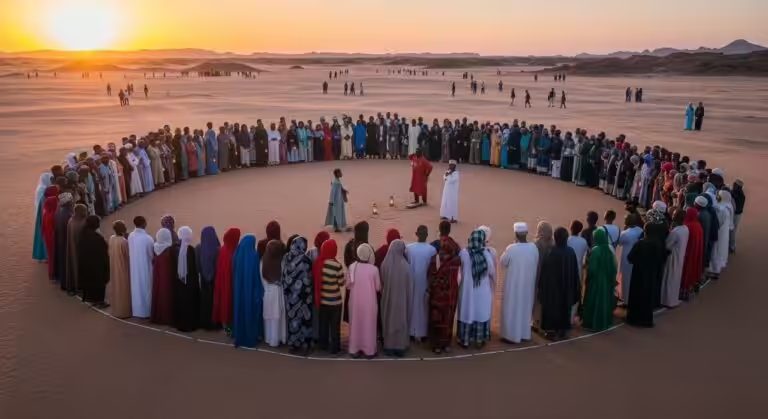
The Christian concept of Unreached People Groups (UPGs) refers to distinct ethnic or linguistic communities that have little or no access to the gospel of Jesus Christ.
A group is generally considered “unreached” when less than 2% of its population identifies as evangelical Christian and there is no indigenous community of believers able to evangelise the rest without outside assistance. This reality often exists because of cultural, linguistic, geographical, or religious barriers. The term highlights a key challenge in global missions: while some regions of the world have vibrant Christian communities, many others remain without the opportunity to hear and understand the message of Christ in their own cultural context.
The focus on UPGs reflects a strategic approach to missions that goes beyond reaching countries to reaching specific communities within them. By identifying groups where the Church is not yet established, Christians prioritise prayer and resources for those with the least access to the gospel. Within this broader category,
Frontier People Groups (FPGs) are those with virtually no known followers of Jesus and no movement to Christ yet emerging—often entire populations with little chance of hearing the gospel without outside workers. The aim in both cases is to plant self-sustaining, culturally relevant churches that can grow within their own context and share the message naturally. This vision flows from the Great Commission, with the ultimate goal of seeing disciples of Jesus in every people group on earth, capable of carrying on the mission from within their own culture.
Unreached World - The 10/40 Window
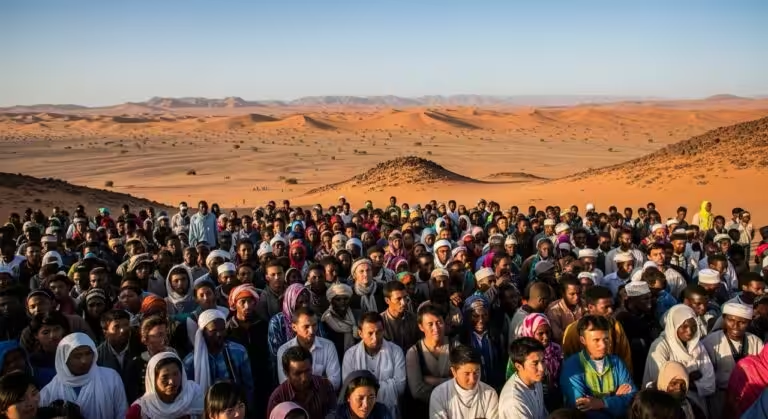
The “10/40 Window” is a term used in Christian missions to describe a rectangular region of the world located between 10 degrees and 40 degrees north latitude, stretching across North Africa, the Middle East, and much of Asia. This area includes some of the world’s most populous nations and is home to the majority of the world’s major non-Christian religions, such as Islam, Hinduism, and Buddhism. It is also the region with the highest concentration of Unreached People Groups, where millions live with little or no access to the gospel. The 10/40 Window highlights the reality that the greatest spiritual need often overlaps with significant social challenges, including poverty, political instability, and restrictions on religious freedom.
For many Christians, the 10/40 Window represents both a challenge and a calling. Mission efforts here are often difficult due to cultural barriers, restricted access, and in some cases persecution, yet this region is viewed as central to fulfilling the Great Commission. By focusing prayer, resources, and workers on the 10/40 Window, the global Church seeks to see vibrant, self-sustaining movements of disciples emerge in these nations. The ultimate goal is that communities across this region—often long considered spiritually distant—will experience the love of Christ in ways that are culturally authentic and transformative.
Business as Mission
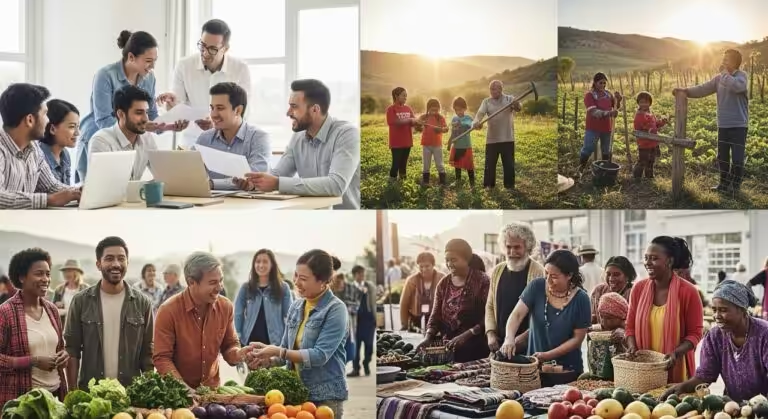
Business as Mission (BAM) is a Christian approach that uses business ventures as a way to serve people and share the love of Christ. Instead of separating business and mission, BAM sees the workplace as a platform for discipleship, justice, and community transformation. Companies—whether small shops, tech start-ups, or international enterprises—are intentionally designed to create real economic value while also contributing to God’s purposes. This might mean providing jobs in areas of poverty, modelling ethical practices in corrupt systems, or creating products and services that bless communities.
The vision of BAM is to see sustainable businesses that advance God’s kingdom while being fully viable in the marketplace. These ventures aim to integrate spiritual impact with social, economic, and environmental good, demonstrating the gospel through both words and actions. In places where traditional missionaries cannot easily go—such as within the 10/40 Window or among Unreached People Groups (UPGs)—BAM opens doors by allowing believers to live and work in authentic ways. The ultimate goal is not only business success but also the planting of disciple-making communities through everyday relationships in the marketplace.
Church Planting Movement
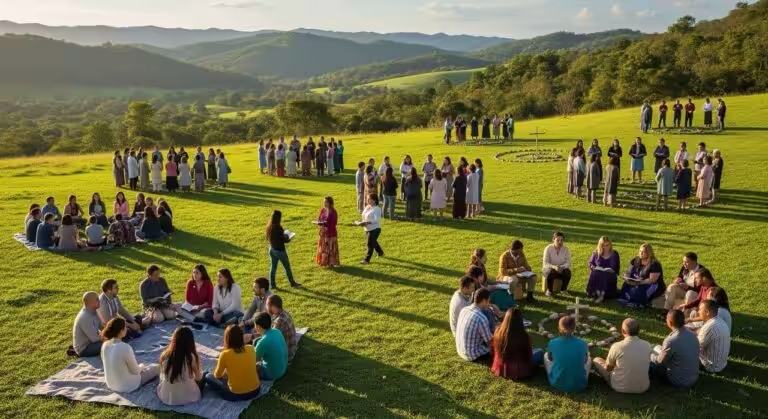
A Church Planting Movement (CPM) is a rapid and multiplicative increase of indigenous churches planting new churches within a specific people group or geographic area. Unlike traditional mission efforts that might focus on planting one or two large, institutional churches, a CPM is characterised by an exponential growth where newly planted churches quickly reproduce themselves. This is a self-sustaining phenomenon where the momentum comes from within the local community rather than being driven by outside missionaries or professional clergy.
A CPM is often considered the result of a Disciple Making Movement (DMM). While a DMM’s primary focus is on making disciples who obey Jesus’s commands and multiply, the natural outcome of this process is the formation of new communities of believers—which are, in essence, churches. Therefore, a CPM is the collective result of discipleship that leads to the organic, rapid multiplication of churches. Both DMM and CPM are centred on a shared vision of obedience to Christ and a belief in the ability of ordinary believers to both make disciples and start new churches.
Non-Governmental Organization
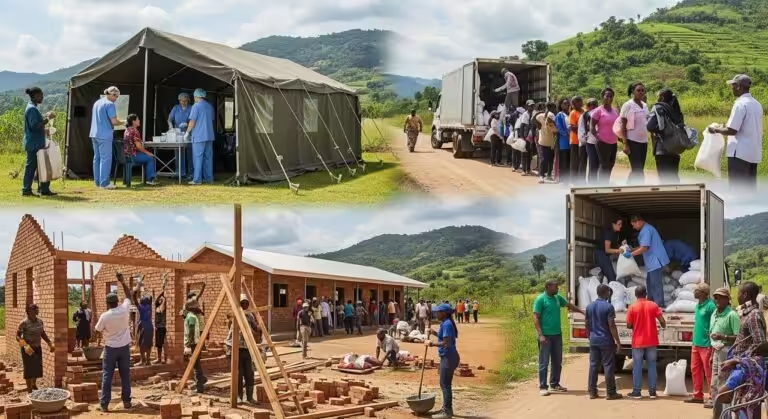
A Non-Governmental Organisation (NGO) is a non-profit group that functions independently of any government. NGOs are typically founded by citizens and operate on a local, national, or international scale to serve a specific social or political purpose. They are a diverse group, ranging from large, internationally recognised charities like the Red Cross to small, community-based groups focused on a particular local issue. They are often funded by private donations, membership fees, and grants from foundations or governments.
Community Focus Calling
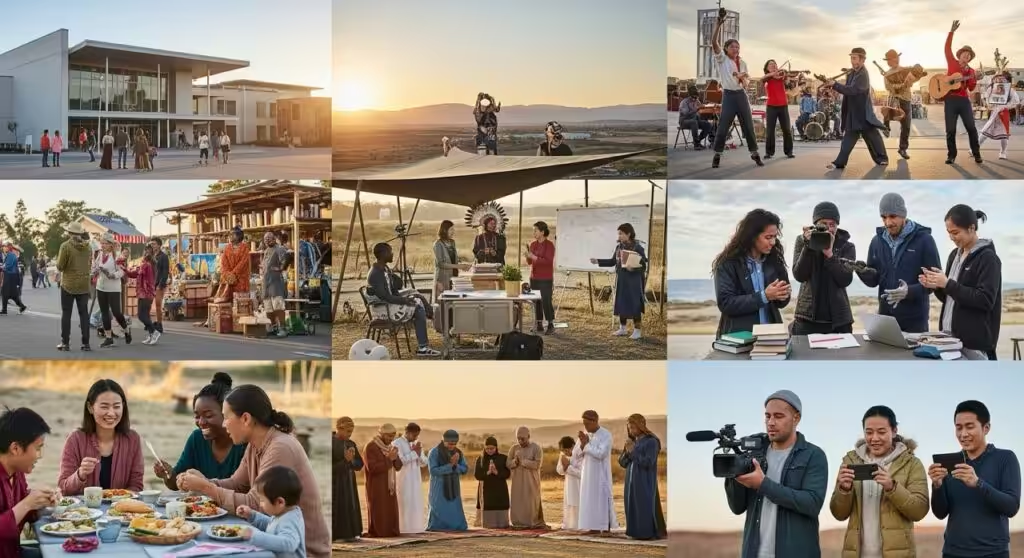
The Community Focus Calling (CFC) is a Christian missional concept that encourages believers to intentionally engage and influence key areas of society. The idea is that the gospel’s impact is not limited to personal salvation but extends to the transformation of entire communities. This calling involves Christians recognising their unique skills, passions, and vocations as tools to bring God’s love and kingdom values into different sectors, such as arts, education, government, media, or business.
This approach shifts the focus from a retreatist mindset to one of active cultural engagement. By identifying a specific area of influence—their “calling”—believers are empowered to become agents of positive change, demonstrating God’s compassion and justice through their daily work. The ultimate goal is to see these foundational societal structures reflect Christian values and principles effecting all aspects of the community.
 English (UK)
  Nederlands